
PQ-NEXT Core with Rodrigo Martín, Indra
PQ-NEXT Core with Rodrigo Martín, Indra
What drives PQ-NEXT from within? PQ-NEXT Core reveals the minds and teams behind the project. By showcasing the perspectives, insights, and ambitions of those leading its key areas, we uncover the vision and collaboration that shape PQ-NEXT’s vision.
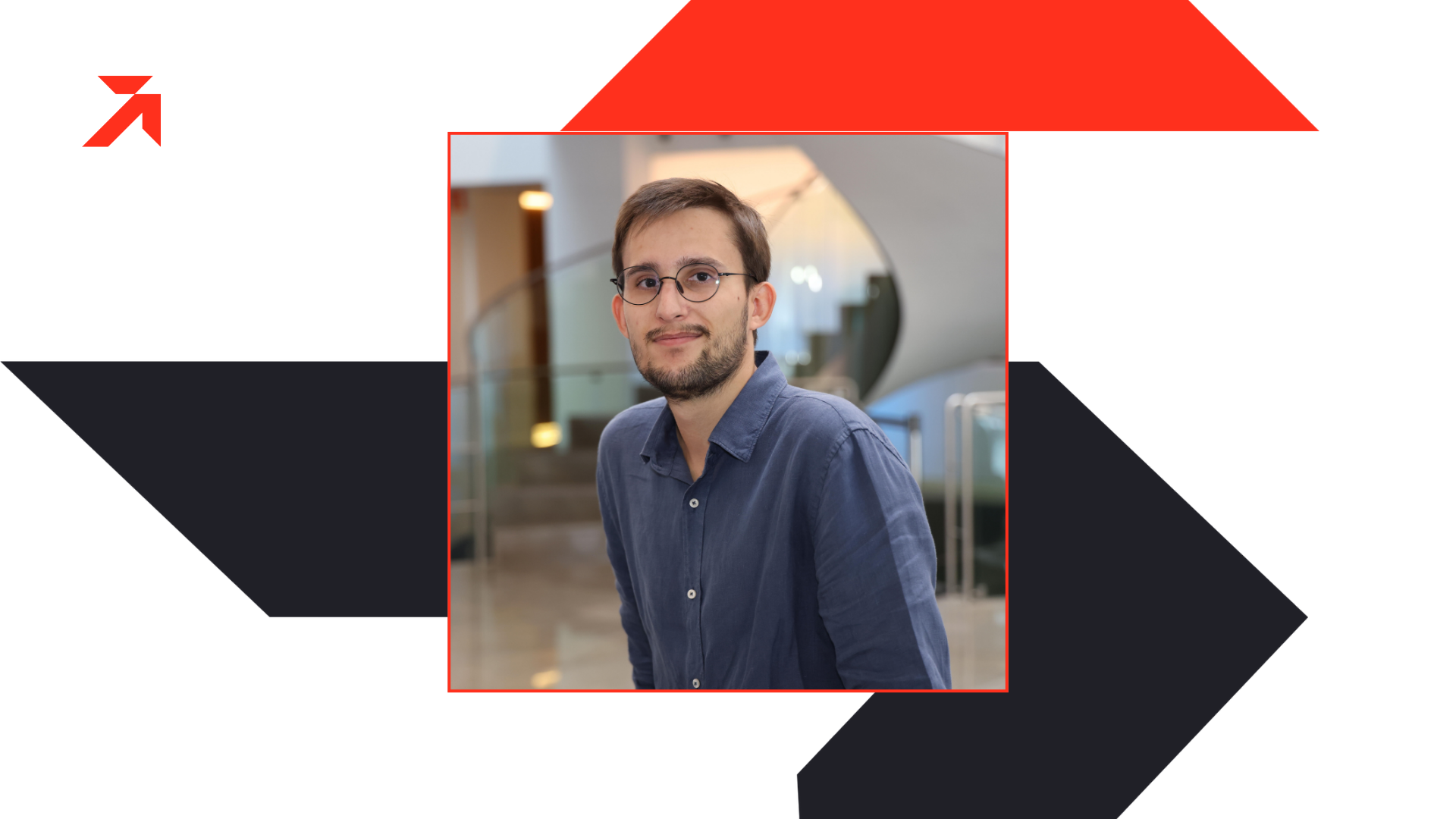
Let’s start by getting to know Rodrigo Martín from Indra a little better and by introducing the team that will work on the project.
My name is Rodrigo Martin. I am a mathematician with over 5 years of experience in both theoretical and practical cryptography, with a strong emphasis on post-quantum cryptography. I am also a fourth-year PhD candidate in lattice-based cryptography and cryptographic protocols, one of the most important branches of post-quantum cryptography. The PhD provides the more theoretical part of my expertise, and in my department, I am tasked with everything related to post-quantum crypto, including implementing and migrating to this type of cryptography, which provides the more applied part of my background. My expertise fully aligns with the project's core objectives.
Besides me, the project will also involve Marta Irene-Garcia, who has a PhD in quantum cryptography and more than seven years of experience in research and development projects; David Domingo, who has been leading cryptographic projects for more than 20 years; and Juan Roman Martínez, who has extensive experience in managing R&D projects. Together, we provide a strong background towards the core objectives and the nature of the project.
What motivated you to join this EU-wide consortium?
Migration to post-quantum cryptography is one of the most important paradigms in digital life today. Day-to-day events over the last year or so show that the European Union must develop its own critical and strategic capabilities, without relying on anyone else. A project that brings together both of these goals, as PQ-NEXT does, is of great interest and importance.
“In a nutshell, the project covers the theoretical and practical aspects of migrating to quantum-resistant solutions, as well as the development of tools to support this endeavour.”
What problem does your role in the project address in simple terms, and why is it critical for the project’s implementation?
In a nutshell, the project covers the theoretical and practical aspects of migrating to quantum-resistant solutions, as well as the development of tools to support this endeavour. My role within the project is to lead Work Package 2 (PQ-NEXT Migration Modelling Tools), coordinating the tasks within it to ensure the final migration toolbox is correct and addresses all needs related to migrating to quantum-resistant cryptography.
What are the main activities, tasks, and objectives of your work?
The main objective of Work Package 2 is to develop a toolset to support the migration to quantum-resistant solutions. This includes providing information on post-quantum algorithms, cryptographic sizes, performance across a variety of environments, available implementations, platform-specific optimisations, security analysis, hybridisation with other schemes, particularly quantum cryptography, and how to incorporate primitives into protocols.
The work package is segmented into four principal tasks:
1. PQC Algorithm Catalogue: Gathering and maintaining information about post-quantum cryptography, including standardisation efforts, hybridisation techniques, migration recommendations, and how companies and organisations are approaching migration. This task provides the theoretical foundations for the migration toolbox.
2. Maintenance and Update Tools: Development and maintenance of the platform tools critical to the real-life operability of the toolbox.
3. Migration to Quantum-Resistant Solutions in Communication Networks: Analysis of how to include quantum-resistant solutions (post-quantum cryptography and quantum cryptography) in relevant protocols such as TLS and IPsec, and analysis of their impact via digital twins and other tools.
4. Migration Toolbox Development: Building the toolbox by combining all inputs from the above tasks and from the other work packages in the project.
How is your work connected to the other tasks and activities?
Work Package 2 aims to develop the migration toolbox, which connects it directly to other work packages. For example, Work Package 4 (Large Scale Pilot Demonstrators) covers the development of pilots, which will use the migration toolbox. We will see how the toolbox applies in practice to relevant examples of organisations migrating to quantum-resistant solutions.
Work Package 3 (Post-Quantum Cryptanalysis Enablers) focuses on the development and analysis of quantum algorithms that attack post-quantum primitives. Those inputs will also be taken into account when constructing the migration toolbox, particularly for recommendations and security analysis.
“I hope that the practical tools developed will be helpful and employed by a wide variety of European actors to assist them in their quest for quantum-resistant migration.”
Moving on, a personal note. What is the main outcome you personally hope this project will achieve?
I hope that this project will advance knowledge of quantum-resistant solutions and how to migrate to these new forms of cryptography. Furthermore, I hope that the practical tools developed in Work Package 2, to measure and analyse the post-quantum transition, will be helpful and employed by a wide variety of European actors to assist them in their quest for quantum-resistant migrations.
Looking ahead, what excites you most about the post-quantum era?
The most exciting thing is participating in a field that is being developed as we speak. As a mathematician, a lot of the work you do involves fields that have been established for quite some time, and you perhaps make incremental advances, but don't really construct something almost from zero. With post-quantum cryptography, you are seeing the foundations being laid — things that started only years ago — and you see daily improvements and daily advances in that field. That is what really excites me about post-quantum crypto.
“The most exciting thing is participating in a field that is being developed as we speak.”
