
PQ-NEXT Core with Marta Fernández, Sploro
What drives PQ-NEXT from within? PQ-NEXT Core reveals the minds and teams behind the project. By showcasing the perspectives, insights, and ambitions of those leading its key areas, we uncover the vision and collaboration that shape PQ-NEXT’s vision.
Let’s start by getting to know Marta Fernández, from Sploro, a little better and by introducing the team that will work on the project.
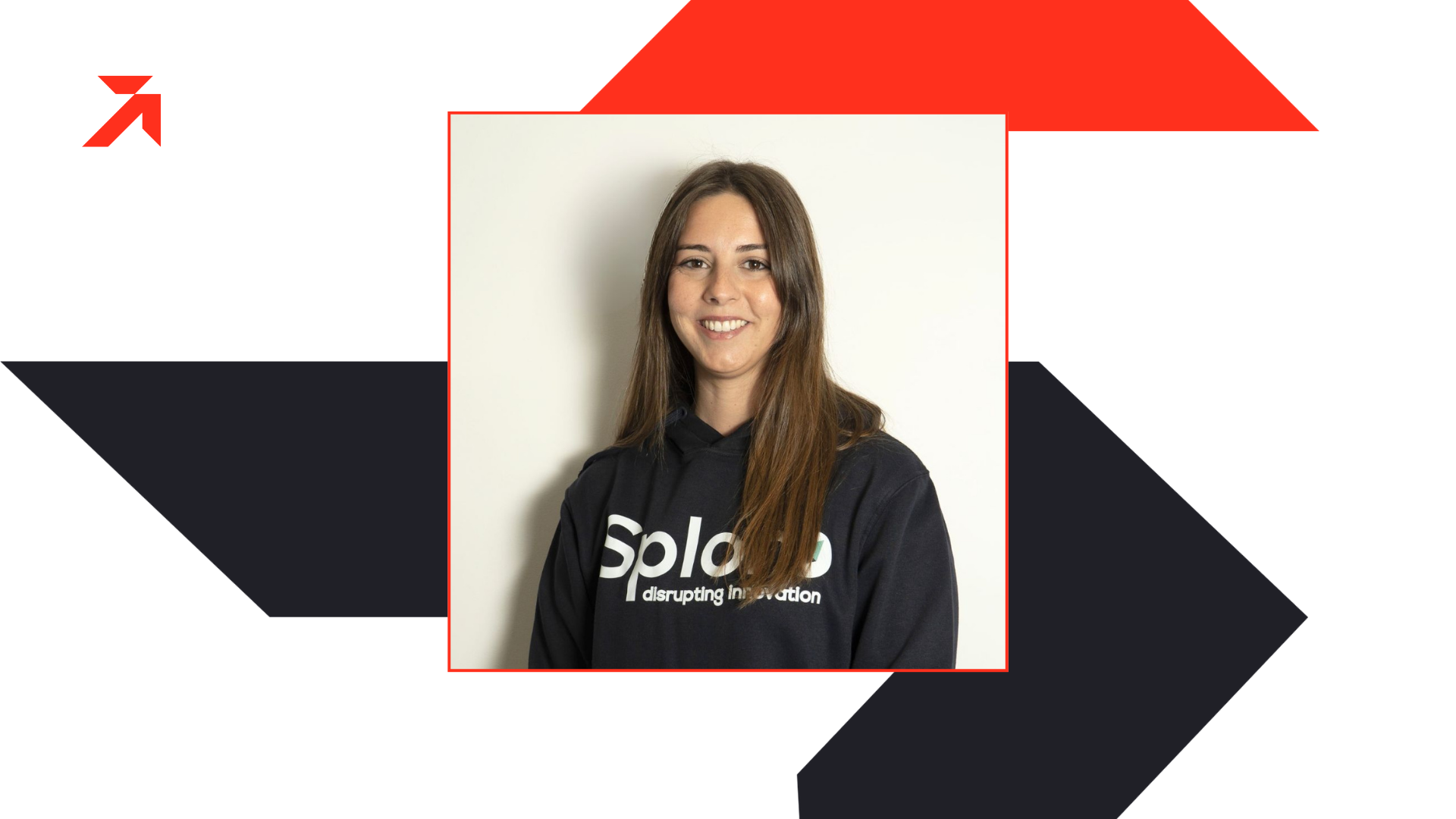
My name is Marta Fernández, and I am a European project manager at Sploro, a consultancy firm based in Pamplona, in the north of Spain. Sploro specialises in cascade funding mechanisms and exploitation activities, among other things.
I studied International Relations in Madrid and later completed a Master’s in European Democracy and Human Rights. Over time, I specialised in the management of European projects, which is the role I bring to PQ-NEXT.
Within the project, I will be working as project manager alongside two colleagues: Virgínia Gómez, who is Head of the European Projects Department at Sploro, and Maya Horvat, another EU project manager who will work closely with me.
What motivated you to join this EU-wide consortium?
Our motivation to join PQ-NEXT was a natural evolution of the work we had already begun. Prior to PQ-NEXT, Sploro collaborated with several of the consortium partners on PQ-REACT. PQ-NEXT is, in that sense, a continuation and expansion of the work started in that previous project, which is how we came to be here.
What problem does your role in the project address in simple terms, and why is it critical for the project’s implementation?
PQ-NEXT aims to close a significant gap that Europe is currently facing. The encryption that protects almost everything we do in the digital world is based on classical computer mathematical algorithms. The transition to post-quantum cryptography is about making our digital security safer and, crucially, making that new security more user-friendly and accessible to everyone, not just large organisations.
Within PQ-NEXT, Sploro serves as the exploitation manager. In the previous project (PQ-REACT), we worked on selecting companies to run pilots on post-quantum cryptography topics. Now, the goal is to spread the knowledge generated by PQ-NEXT more broadly, using tools such as the migration toolbox being developed by the technical partners to make the transition easier for both large and small users, and to validate this across real-world pipelines.
“Now, the goal is to spread the knowledge generated by PQ-NEXT more broadly, using tools such as the migration toolbox being developed by the technical partners to make the transition easier for both large and small users, and to validate this across real-world pipelines.”
What are the main activities, tasks, and objectives of your work? And How is your work connected to the other tasks and activities?
Sploro leads exploitation activities within Work Package 6 “Dissemination, Communication and Exploitation”, which also covers dissemination and communication. Specifically, we work on Task 6.3 — Innovation Management and Exploitation Sustainability. This task encompasses several core activities:
1. Joint Exploitation: Developing a shared exploitation strategy for the project as a whole, alongside individual exploitation strategies tailored to each partner’s profile and outputs.
2. Market Research and Business Modelling: Conducting market research that will feed into a business model and go-to-market strategy for the project’s exploitable assets.
3. Knowledge Transfer and Upskilling: Developing knowledge transfer materials and upskilling resources for end users who will benefit from the post-quantum cryptography tools produced by the project. This is the activity I consider most important.
Exploitation does not happen in a vacuum; it is deeply connected to every part of the project. For our exploitation roadmap to be meaningful, we need to fully understand what the technical partners are building, including the migration toolbox and the algorithm catalogue. We work closely with the pilot leaders and also with the dissemination team, who build the project ecosystem and communication strategy that our exploitation activities build upon.
“We work closely with the pilot leaders and also with the dissemination team, who build the project ecosystem and communication strategy that our exploitation activities build upon.”
Moving on, a personal note. What is the main outcome you personally hope this project will achieve?
My hope is perhaps more grounded in a general user perspective than a technical one. I think the most important thing we can deliver is something that everyone can use, a clear and accessible pathway for organisations of all sizes to move from traditional security methods to post-quantum cryptography.
This should not be something only large corporations with existing expertise can benefit from. Municipalities, small businesses, and any organisation working with sensitive data should be able to make this transition. Making that transition genuinely accessible to all would be the most meaningful result of this project.
“I think the most important thing we can deliver is something that everyone can use, a clear and accessible pathway for organisations of all sizes to move from traditional security methods to post-quantum cryptography.”
Looking ahead, what excites you most about the post-quantum era?
Coming from a non-technical background, what excites me most is reading the European Commission’s roadmap for the coming years and seeing the level of commitment to citizens’ security. The way in which the transition to post-quantum security is being approached, and the fact that a major institution like the European Commission is actively driving it, is what I find most encouraging. Having a region genuinely committed to protecting its citizens’ digital security is something worth being excited about.
“The way in which the transition to post-quantum security is being approached, and the fact that a major institution like the European Commission is actively driving it, is what I find most encouraging.”