
As we approach our first anniversary, we’re taking a moment to reflect on the activities that have helped spread the word about PQ-NEXT and bring the project closer to audiences across Europe.
Alongside their ongoing research work, our partners have actively participated in a wide range of events throughout the first year. From workshops and community events to major international conferences and exhibitions, the PQ-NEXT partners have travelled across Europe and beyond to introduce the project, exchange knowledge, and raise awareness of the importance of preparing for the post-quantum era.
PQ-NEXT made its debut at “ITASEC – Italian Conference on Cybersecurity”. The Italian Conference on CyberSecurity (ITASEC) is an annual event started in 2017 and supported and organised by the CINI Cybersecurity National Lab. On February 11th, 2026, our partners from Smartlex, Giovanni Comande and Chiara Nasi, travelled to Cagliari, Italy and presented their publication “Beyond Compliance: from ISO and NIST 2.0 strategic choices to proactive risk management”, which presents an operational and pragmatic model designed to simplify complex regulatory compliance into an easily applicable business management system. Explore the publication here!
Then, early in summer, our partners from AFCEA participated in the “HEMUS 2026 – International Defence Equipment and Services Exhibition” in Plovdiv, Bulgaria. They hosted a stand for the full duration of the exhibition, from 3-6 of June, 2026, distributing project dissemination materials and engaging in insightful discussions with visitors. But summer was a busy season for the PQ-NEXT partners; the 3rd Workshop on Quantum-Secure Networks and Systems (QSNS 2026) took place on 23 June 2026 in Vilamoura, Portugal, co-located with the 31st IEEE Symposium on Computers and Communications. Jointly organised by the SPQR Cluster project, the workshop brought together researchers, industry experts, quantum enthusiasts and practitioners to discuss the challenges that the development of quantum computers will pose to current digital security. And last but not least, the “Beyond the Algorithm: the Road to Quantum-Safe Europe”. The final event of PQ-REACT, jointly organised with the SPQR cluster, took place on 11 June 2026 in Bucharest, Romania, and PQ-NEXT had one more chance to shine in front of an audience with researchers, policymakers, legal experts, and EU project representatives, discussing the future of post-quantum cryptography in Europe and beyond.
The fall came, and alongside our General Assembly Meeting and the Back to School notes, our partners from the AGH University, Marcin Niemiec and Daniel Karcz, participated in MIST 2026 – Workshop on Mobile and IoT Security Technologies, co-located with ESORICS 2026! On September 18th, 2026, at Sapienza Università di Roma, they presented their paper, “Lightweight Feature-Based Power Side-Channel Analysis of ML-KEM on Embedded Platforms”, during the MIST Workshop.
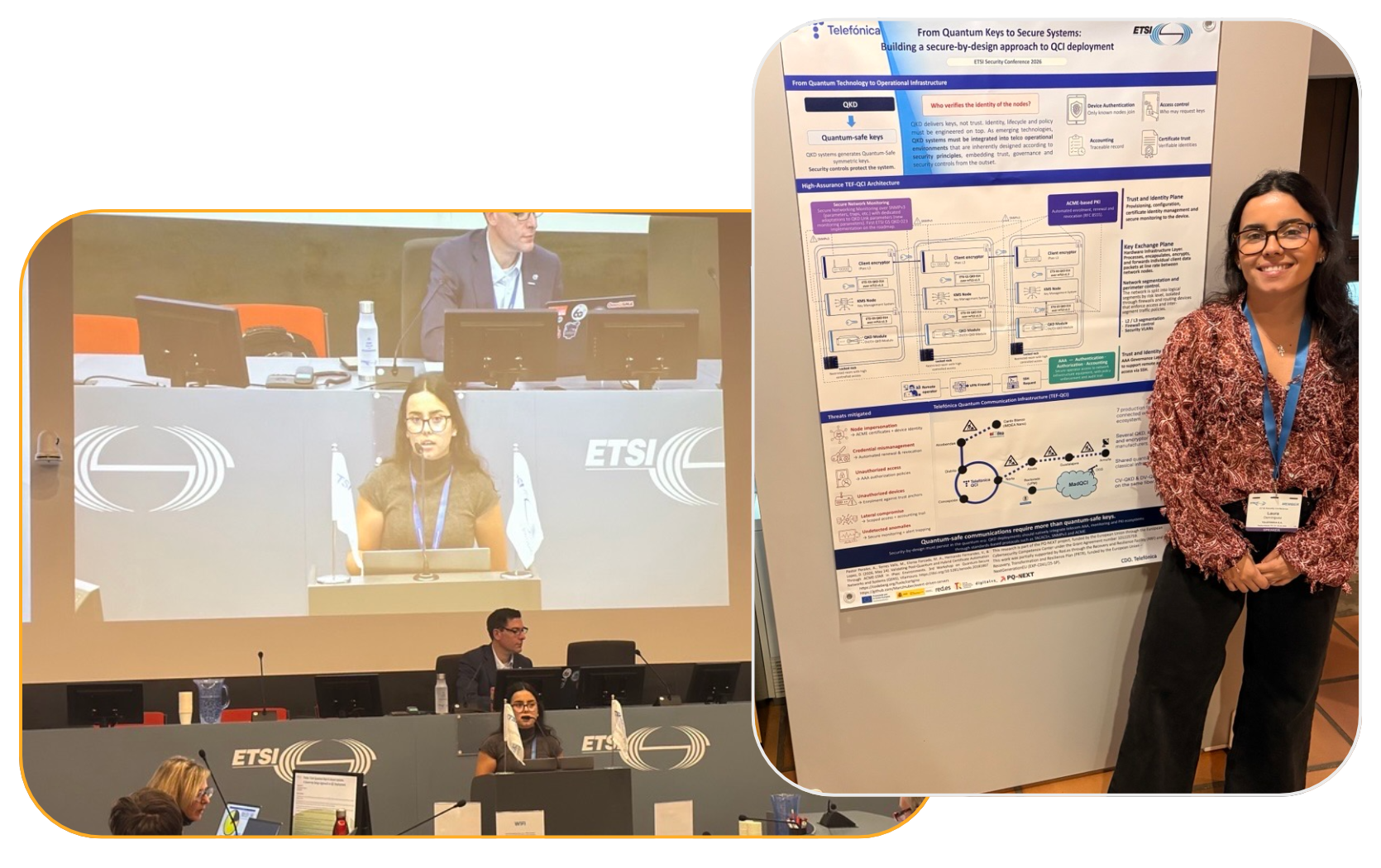
Following this, Diego R. Lopez from Telefónica travelled to Lisbon, Portugal, to attend the QIA Community Event 2026. In his presentation, “Why Quantum Networking Matters Now, Not Later”, he discussed the urgent need to prepare in advance for the quantum shift and presented the rationale behind PQ-NEXT’s activities. Telefonica also continued to participate in major events. This time, Laura Dominguez Cespedes, representing Telefonica, participated in the ETSI Security Conference 2026, presenting a poster on security issues and work on the PKI initiative based on the ACME protocol.
Laura’s Reflection:
“As expected, attending the ETSI Security Conference 2026 confirmed that the main cybersecurity trends and priorities across industry, vendors, regulators and standardisation bodies are currently focused on three major areas: AI Security, the Cyber Resilience Act (CRA), and the Quantum-Safe (QS) transition.For me, the most interesting part was the Quantum-Safe track, of course. Several presentations covered the work being carried out across standards bodies, protocol communities and technology vendors to enable the migration towards quantum-safe infrastructures. Discussions included PQC deployment, crypto-agility, PKI migration, hybrid approaches, IPsec/IKEv2 evolution and real-world transition experiences.
One of the key takeaways was seeing how all these initiatives are converging towards a common goal: enabling a practical migration path to quantum-safe technologies and the respecified need to adopt NIST PQC algorithms and migrate at least to TLS 1.3 right now.
The best part is that many of the topics discussed are aligned with the foundations we are already pursuing in PQ-NEXT: the migration of existing protocols towards quantum-safe alternatives, adoption of NIST post-quantum algorithm
s, crypto-agility, hybrid deployments, and the need to evolve PKI systems.”
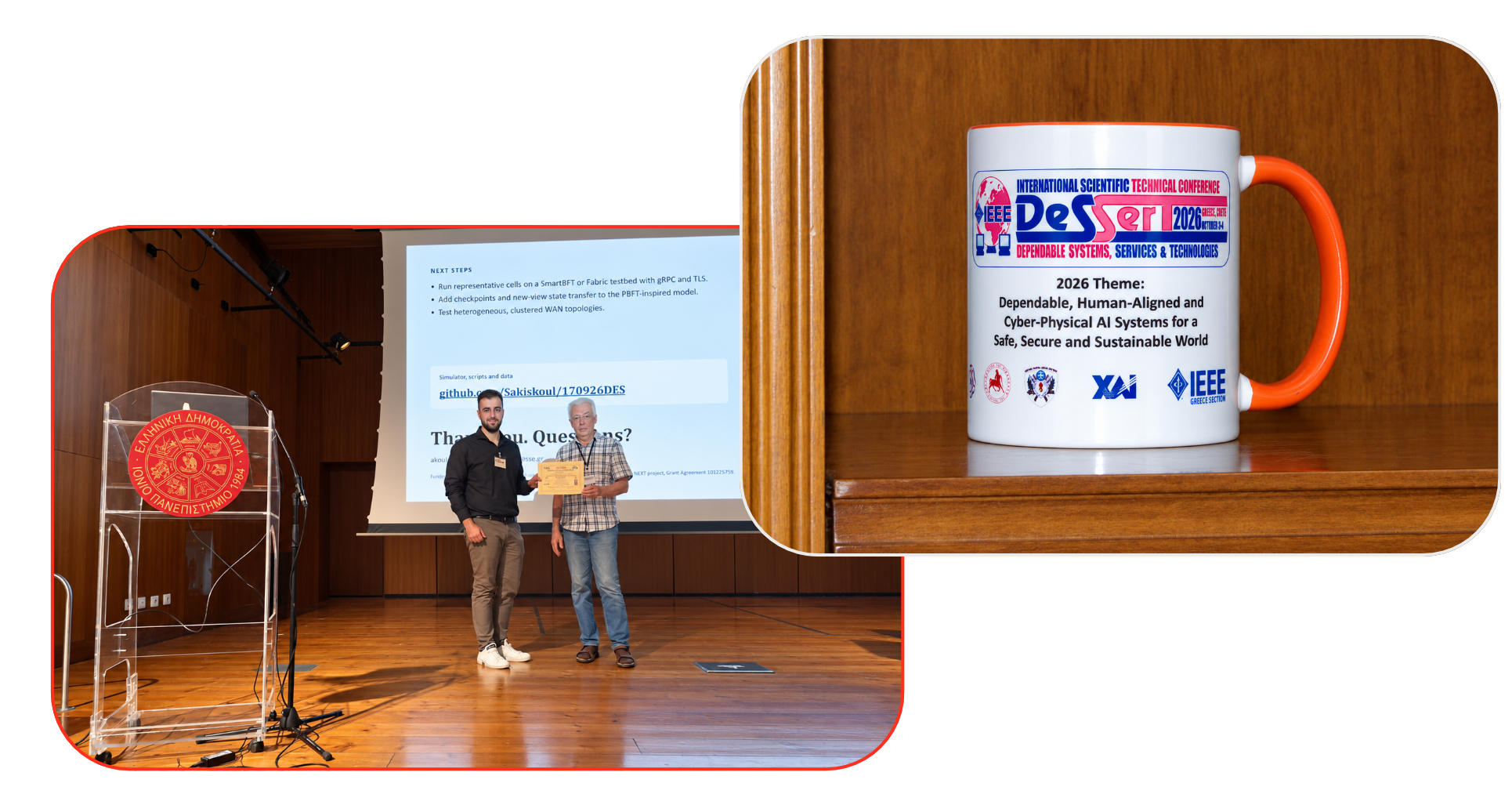
In September, our Infili partners delivered another insightful presentation. Sakis Koulianos participated in the 16th IEEE International Conference on Dependable Systems, Services and Technologies (DESSERT 2026), in Corfu, Greece, from October 2–4, 2026. The conference brought together researchers working on cybersecurity, dependable systems, and related technologies, with multiple interesting presentations and plenty of opportunities to meet people and exchange ideas. The presentation focused on how post-quantum digital signatures affect the performance of blockchain consensus protocols under different network conditions. One interesting question related to this work is how we can introduce stronger security without significantly affecting network performance, especially as blockchain networks become larger and more complex. His paper, “Topology-Aware Evaluation of Post-Quantum Signatures in Fabric-Inspired Ordering Networks”, will be available soon.
And last but not least, our project coordinator, Akis Kourtis, from Demokritos,
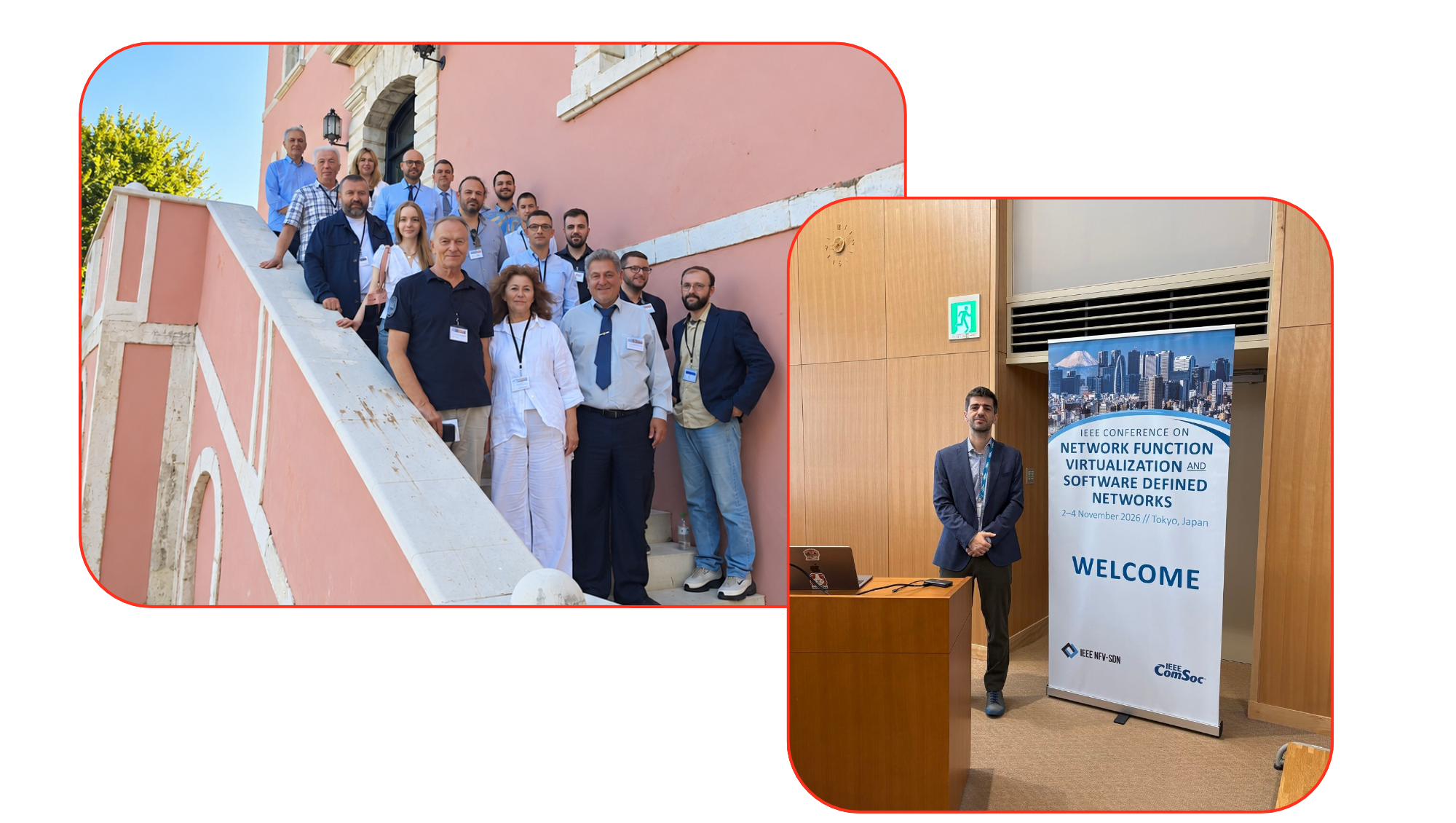 travelled to Tokyo, Japan, to attend the IEEE NFV-SDN 2026 conference. Two papers were presented. The first, “Adversarial Agentic AI for Dynamic Backdoor Evasion and Detection in Cloud-Native 5G Core Networks”, examines how persistent threats in cloud-native 5G cores can be detected, even when AI agents keep modifying them to evade conventional defences. Meanwhile, “Quantum-as-a-Service in the Softwarised Edge–Cloud Continuum” evaluates what it takes to run quantum workloads as cloud-native network functions, orchestrated across the edge–cloud continuum with the same tools operators already use.